
Walton County Arrest Records and Court Charges
Walton County arrest records start on the law-enforcement side. The Walton County Sheriff's Office operates the county jail and publishes the official current inmate roster for people in local custody. That roster is not the same thing as a court conviction record. It can show arrest date, arrest agency, arrest location, offense text, court reference, bail amount, bail type, and related custody fields when the current XML roster includes them.
Court charges after arrest are the formal accusations that move into a court file. In Walton County, felony and many serious criminal matters route to Superior Court through the Clerk of the Superior Court, while Magistrate Court handles criminal warrants, preliminary hearings, misdemeanor warrants, good behavior warrants, and search warrants. A single arrest may produce several charges, and each charge can later be amended, reduced, dismissed, nolle prossed, or resolved by plea, verdict, or sentence in the full criminal case file.
The official Walton jail roster is a useful custody source, but it should be read as the arrest-side record. The Walton County inmate roster is the better place for booking and jail details, while the Walton County criminal court record is where disposition, plea, sentencing, probation, and revocation filings belong once the case is filed.
The Walton County jail roster XML is the official sheriff custody list tied to current jail records.
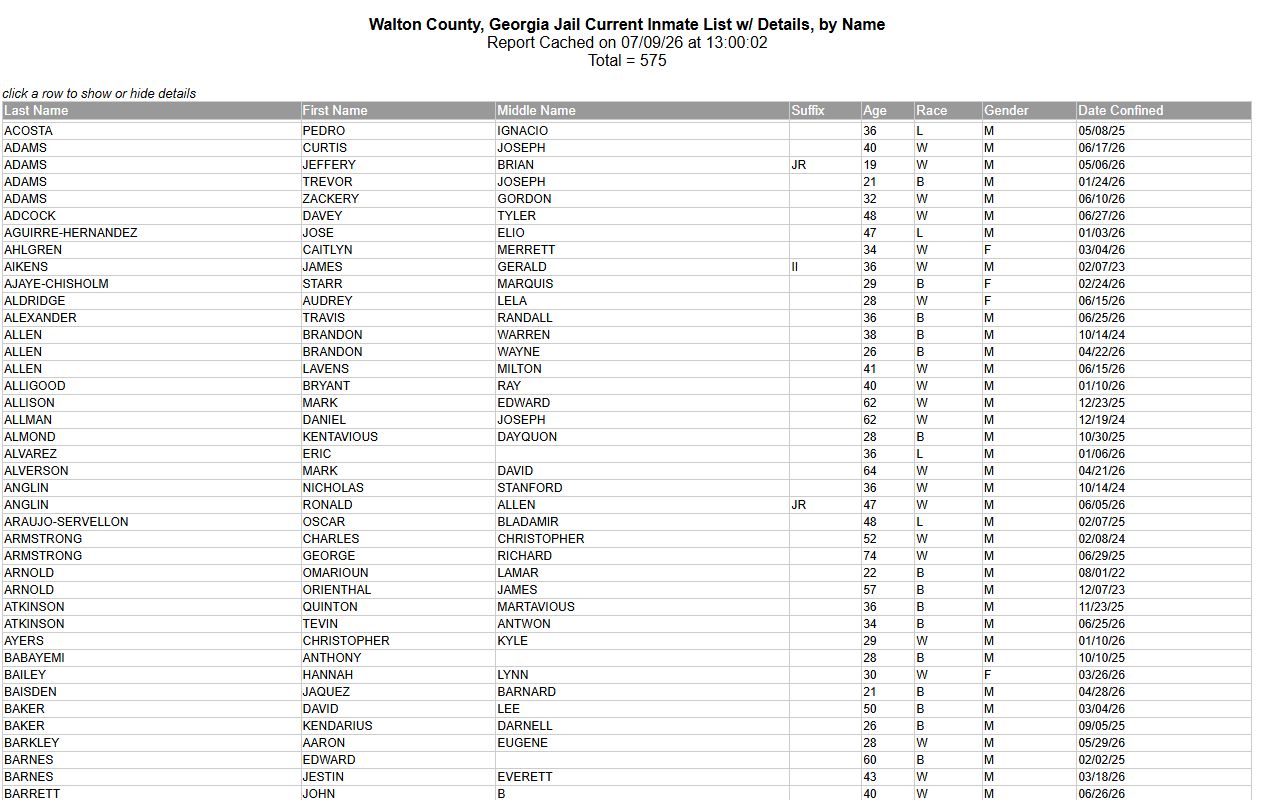
Use the roster for custody and booking context, then move to the court or prosecutor channel to understand the filed charges.
Walton County Arrest Record vs Charge Record
The arrest record and the charge record answer different questions. The arrest record says a person was taken into custody or processed by law enforcement. The charge record says what legal accusation was filed and which court is handling it. Treating the two as the same can create mistakes, because an arrest can be followed by no filed case, a different filed charge, several separate charges, or a later dismissal.
| Point of comparison | Arrest or booking record | Court charge record |
|---|---|---|
| Main custodian | Walton County Sheriff's Office, municipal police, or another arresting agency | Magistrate Court, Clerk of the Superior Court, Probate Court, or municipal court |
| Typical fields | Arrest date, agency, location, jail housing, bail, offense description | Case number, charge, statute or offense text, court, status, plea, disposition |
| Best first source | Current jail roster or sheriff open-records process | Magistrate warrant portal, Clerk of the Superior Court, or municipal court |
| What it does not prove | It does not prove guilt or final charge outcome | A filed charge is not a conviction unless the case ends in guilt |
The Walton County Sheriff's Administration Division identifies records, warrants, and GCIC/NCIC work as part of the sheriff access path.
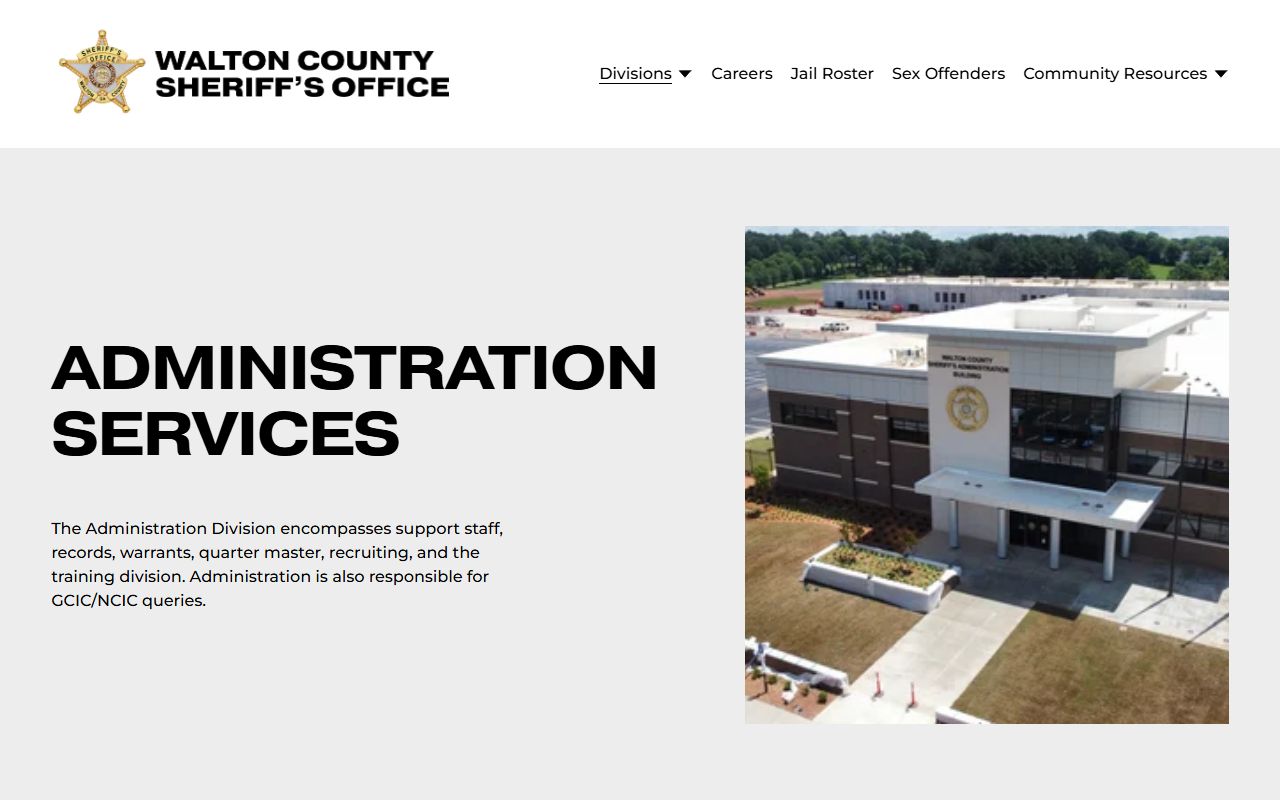
Sheriff records can help verify the arrest-side event, while the court custodian confirms the filed charge and court status.
Access Walton County Arrest Records
Walton County does not use one public database for every arrest, warrant, and court charge. Start with the stage of the case. If the person is currently in local custody, use the WCSO roster. If the matter began as a Magistrate warrant, check Magistrate Court. If a felony or Superior Court criminal case has been opened, contact the Clerk of the Superior Court. If the arrest came from a city citation or city court date, Monroe, Loganville, Social Circle, or Walnut Grove Municipal Court may hold the active bench-warrant or case record.
- Check the current Walton County jail roster for custody, arrest, offense, court reference, and bail fields.
- Use the Walton Magistrate WebCaseManagement channel for criminal warrants issued through Magistrate Court, remembering that documents are not viewable online.
- Contact the Clerk of the Superior Court for Superior Court criminal filings, accusations, indictments, pleas, disposition, and sentence records.
- Use the sheriff open-records process for incident reports, administrative warrant questions, and law-enforcement records.
- Check the correct municipal court when the issue is a city traffic or ordinance case that may have produced a bench warrant.
Georgia public access law generally favors inspection of government records, but the custodian still matters. Under the Georgia Open Records Act, agencies may charge reasonable costs and should respond within three business days. Court records also follow court access rules, including Uniform Superior Court Rule 21 for access limits and redaction rules for sensitive identifiers.
Walton County Charging Documents
After an arrest, the legal case turns on the charging document. Walton County research shows that Superior Court criminal records can include warrants, citations, accusations, indictments, pleadings, motions, orders, pleas, dispositions, sentences, probation conditions, and related docket entries. Magistrate Court handles many warrant and preliminary criminal matters before the case is resolved there or moves onward.
| Charging paper | Who uses it | What it can mean in Walton County |
|---|---|---|
| Complaint or warrant | Law enforcement, complainant, or Magistrate Court process | Often tied to the first court authorization for arrest, search, or preliminary criminal review |
| Accusation | District Attorney or prosecuting office | A prosecutor-filed charging document that can appear in Superior Court criminal records |
| Indictment | Grand jury | A felony charging document that becomes part of the Superior Court criminal case file |
The Alcovy Judicial Circuit District Attorney is the local prosecuting office for Superior Court criminal cases. The Walton office is in the Walton County Government Building, Suite 334, and the DA contact page lists the office phone as 770-267-1355. The Public Defender office may appear in court records when an eligible defendant has appointed counsel.
Walton County Charge Status Table
A charge status is the current condition of one filed accusation. It can differ from the case status, because one case may include multiple counts and each count can move in a different way. Walton court records may show the status in docket entries, orders, plea papers, sentencing records, or disposition fields.
| Status | Meaning for a filed charge | Where to verify |
|---|---|---|
| Pending | The charge is still open and has not reached plea, verdict, dismissal, or other final result. | Clerk of the Superior Court, Magistrate Court, or municipal court |
| Amended or reduced | The prosecutor or court record reflects a changed charge, level, or wording. | Charging paper, amended accusation, docket, or order |
| Dismissed | The court has ended that charge without conviction, often by order or disposition entry. | Disposition, order, or clerk-certified case record |
| Nolle prosequi | The prosecutor has chosen not to proceed on that charge at that time. | DA filing, clerk docket, or court order |
| Convicted | The charge resulted in a guilty plea, guilty verdict, or other guilt finding. | Plea, verdict, sentence, and final disposition |
Note: A current roster offense or old warrant result should be verified against the court file before it is treated as the final case outcome.
Walton County Charges vs Convictions
Being charged is not the same as being convicted. A charge is an accusation filed after an arrest or warrant process. A conviction requires a guilty plea, guilty verdict, or other finding of guilt. Walton County records can show both, but the reader has to look at the final disposition, plea, sentence, and probation terms before calling a charge a conviction.
| Question | Charge | Conviction |
|---|---|---|
| What stage is it? | Accusation or count filed in court | Final guilt result on a count |
| Can it change? | Yes, it may be amended, reduced, dropped, or dismissed | It may later be appealed, modified, restricted, or sealed only through proper legal process |
| What proves it? | Warrant, accusation, indictment, citation, or docket entry | Plea, verdict, disposition, sentence, or judgment entry |
| Common mistake | Assuming an arrest offense is the final charge | Assuming every listed charge ended in guilt |
The Georgia VINE system provides custody and case notification tools that can help track changes after an arrest.
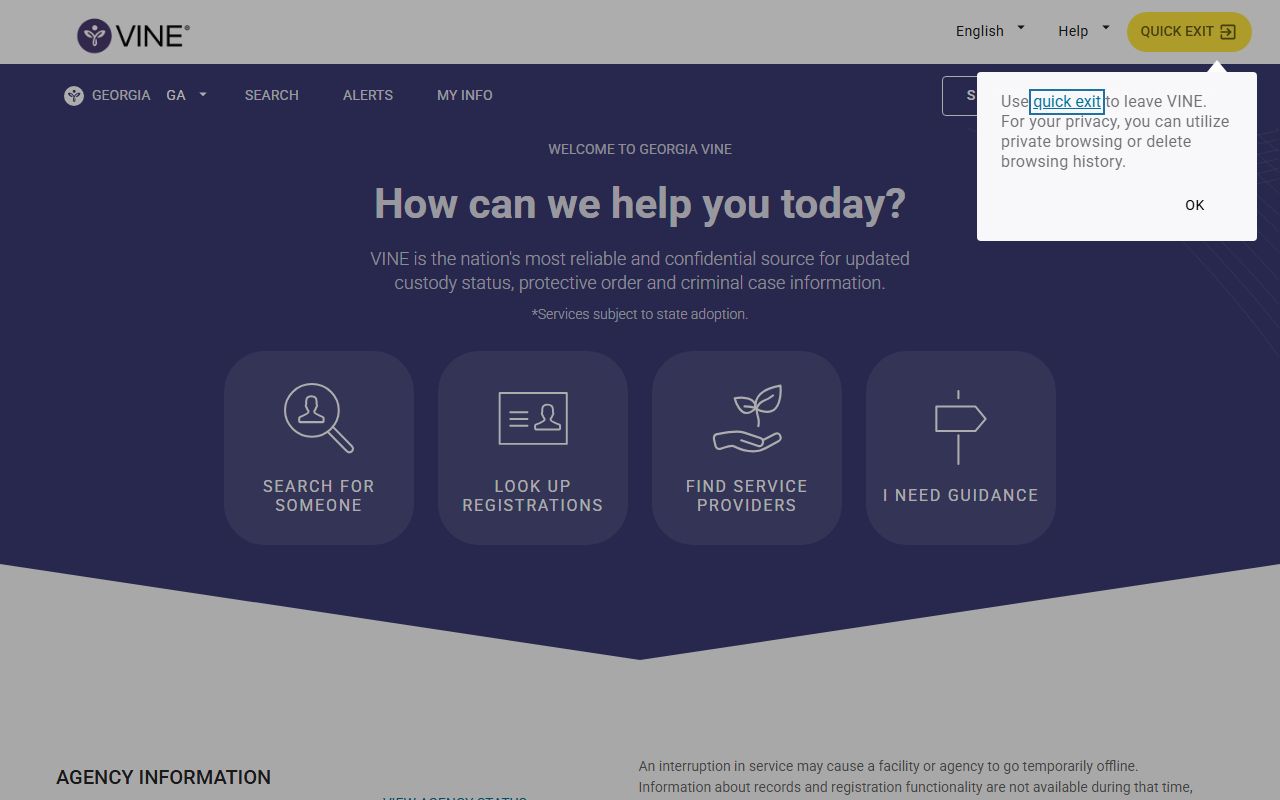
Notifications are useful for timing, but certified outcomes still come from the court or official criminal-history custodian.
Georgia Charge and Offender Tools
State systems can help when a Walton County arrest led to prison custody, registry duties, or a statewide notification record. These tools do not replace the Walton County jail roster or the Clerk of the Superior Court. They answer a narrower question: whether a person appears in Georgia Department of Corrections custody data, Georgia VINE, or the GBI registry.
The Georgia Department of Corrections find offender page explains the state offender search path for people in state custody.
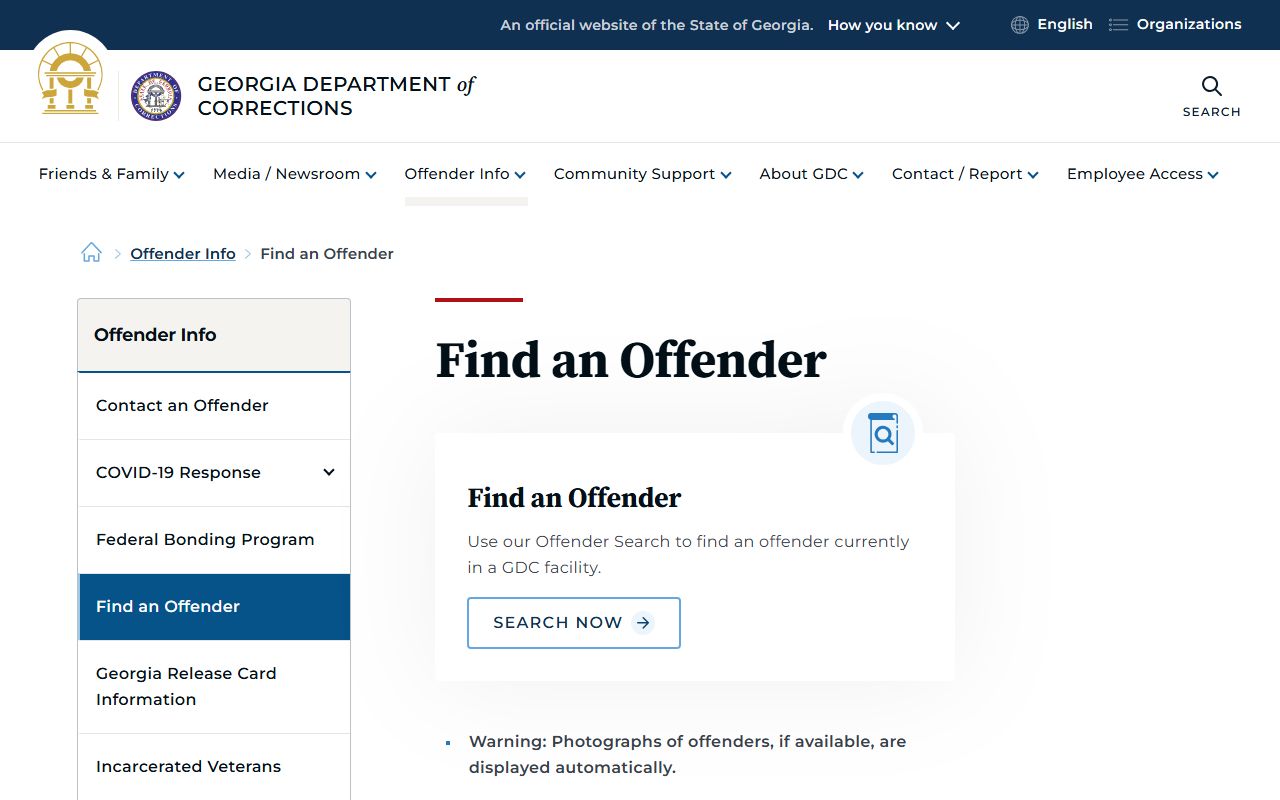
Use GDC only after considering whether the person is in state custody rather than Walton County jail custody.
The GDC offender query form is the direct state search interface for offender records.
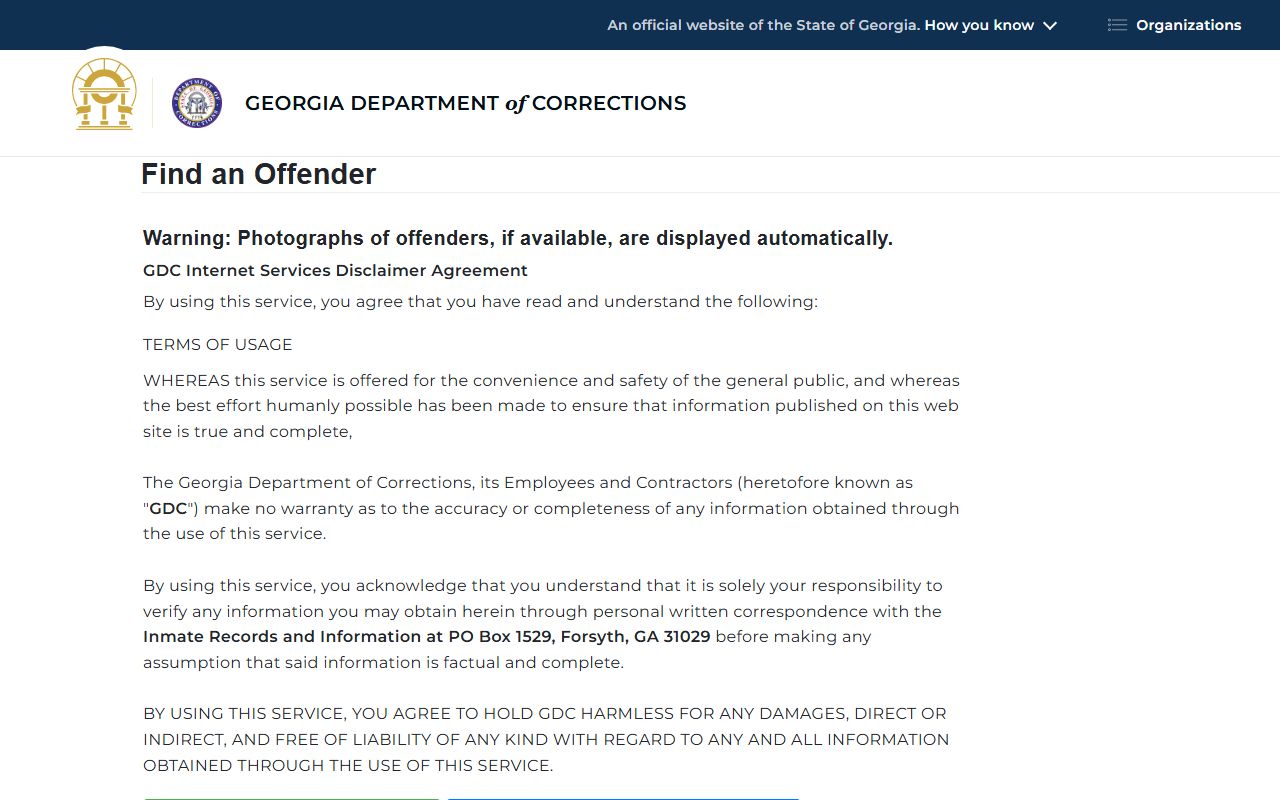
A state offender result can identify custody placement, but it does not show every local arrest or every local court charge.
The GBI Sex Offender Registry service is the statewide service tied to O.C.G.A. 42-1-12.
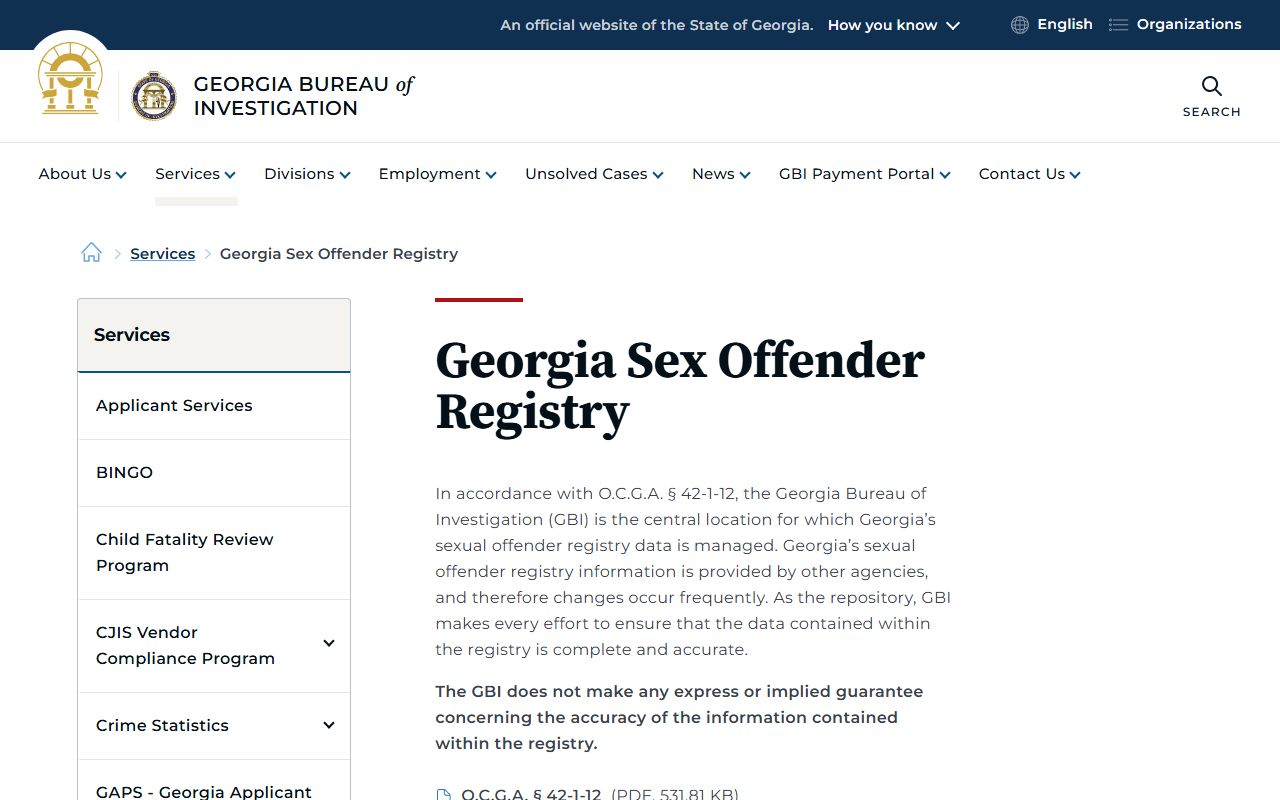
Registry searches are conviction and registration focused, so they should not be used as a general arrest-record lookup.
Restricted Walton County Charge Records
Some Walton County arrest records and charge records are not open in the same way as standard adult criminal filings. Juvenile Court handles delinquency, CHINS, dependency, custody-related juvenile matters, and juvenile traffic matters, and those files should be treated as restricted unless a statute or court order allows access. Sealed records, adoption materials, mental health proceedings, and sensitive personal identifiers are also limited or redacted.
Georgia often uses the term record restriction for criminal-history limits. A person seeking restriction may need to identify the arresting agency, court, disposition, DA action, and whether the charge ended by conviction, dismissal, nolle prosequi, acquittal, first-offender discharge, or another result. If access is restricted, the criminal-history entry may be limited, but public court sealing can require a separate court order under court rules.
Important: Do not use arrest records or charge records for FCRA-regulated screening unless the source and use comply with federal law.